
Technology
Vacuum & Conduction Drying
Low pressure and temperature for heat-sensitive, oxidizable and solvent-bearing materials
How it works
Vacuum lowers the boiling point of the solvent while heat is supplied through heated walls, so drying proceeds at lower temperature and solvent can be condensed and recovered. The range includes static vacuum cabinet, double-cone, conical ribbon, rake and paddle types.
- Transformation
- Solvent- or water-bearing material → Dried material
- Typical feed
- Filter cakes, pastes, powders and solvent-bearing materials
- Typical output
- Dried powders or granules
- Scale
- Pilot
Key advantages
- 01
Low-temperature drying protects heat-sensitive and oxidizable materials
- 02
Closed operation allows solvent condensation and recovery
- 03
Agitated or tumbling designs give more even heating
- 04
Several designs for different material forms
Vacuum & Conduction Drying equipment5
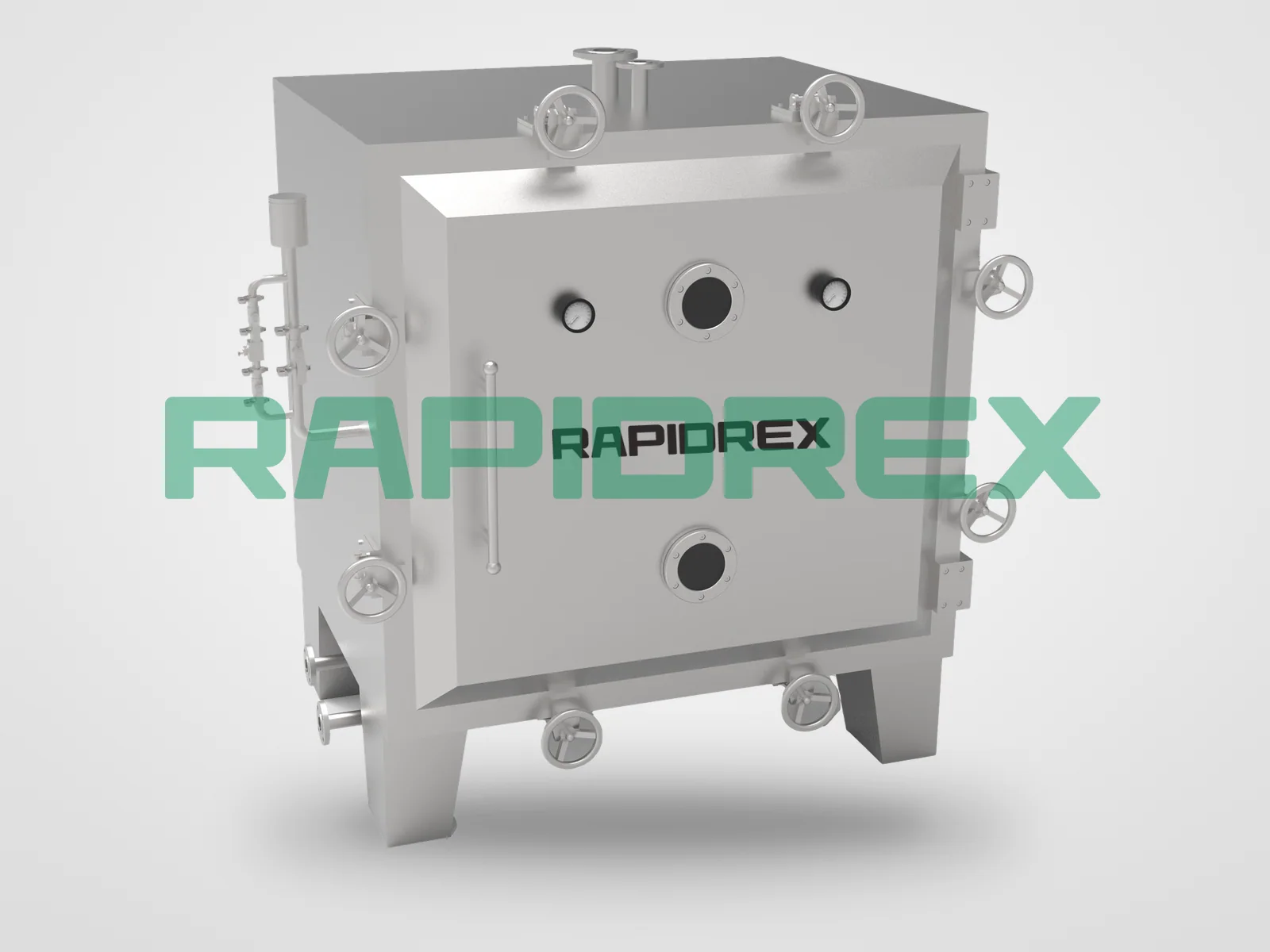
Vacuum & Conduction Drying · Pilot scale
Pilot Static Vacuum Cabinet Dryer
A vacuum-oven-type tray batch dryer for heat-sensitive and oxidizable materials.
Learn more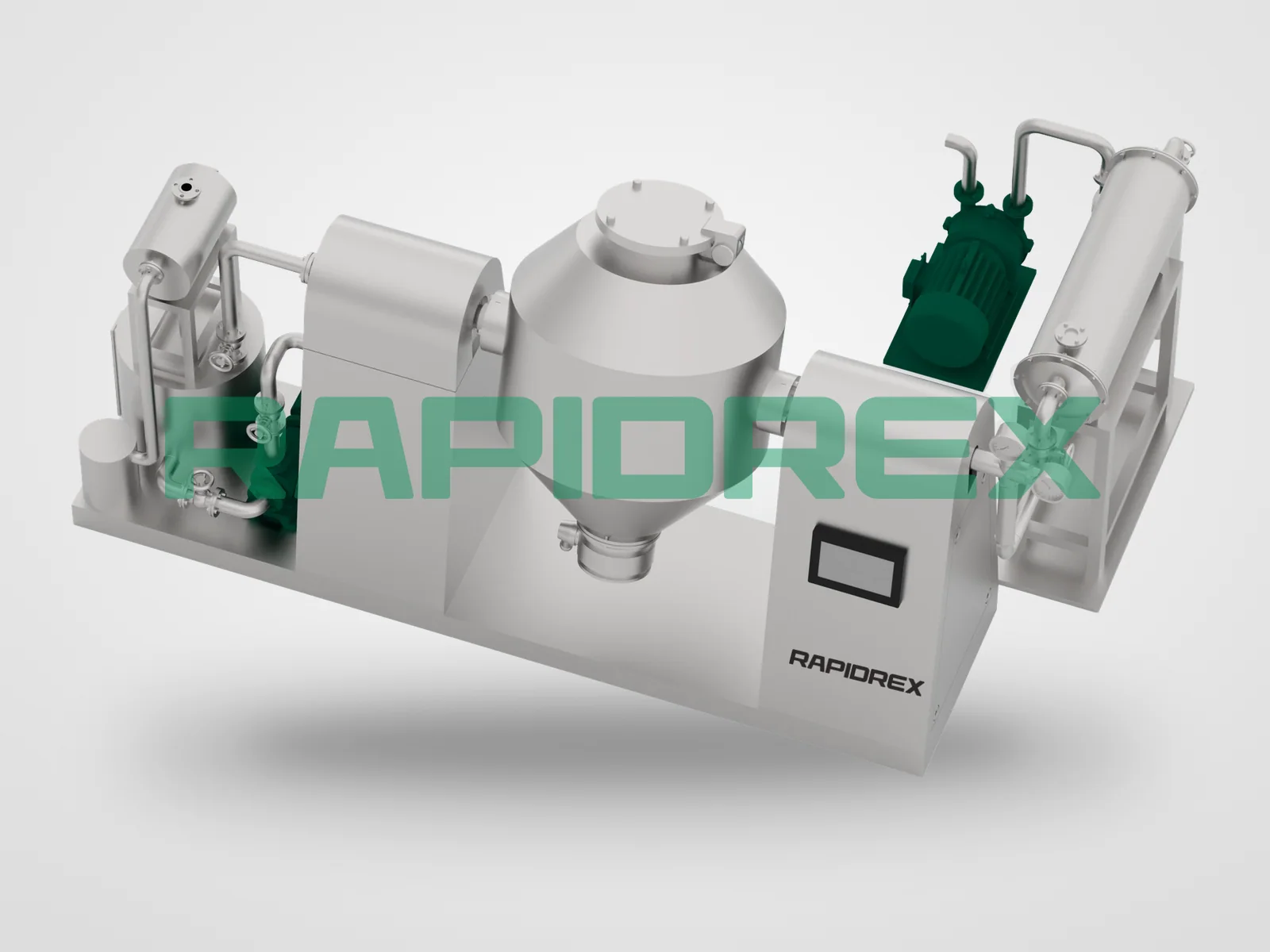
Vacuum & Conduction Drying · Pilot scale
Pilot Double Cone Rotary Vacuum Dryer
A rotating double-cone vessel tumbles the material while it is heated under vacuum, for even drying.
Learn more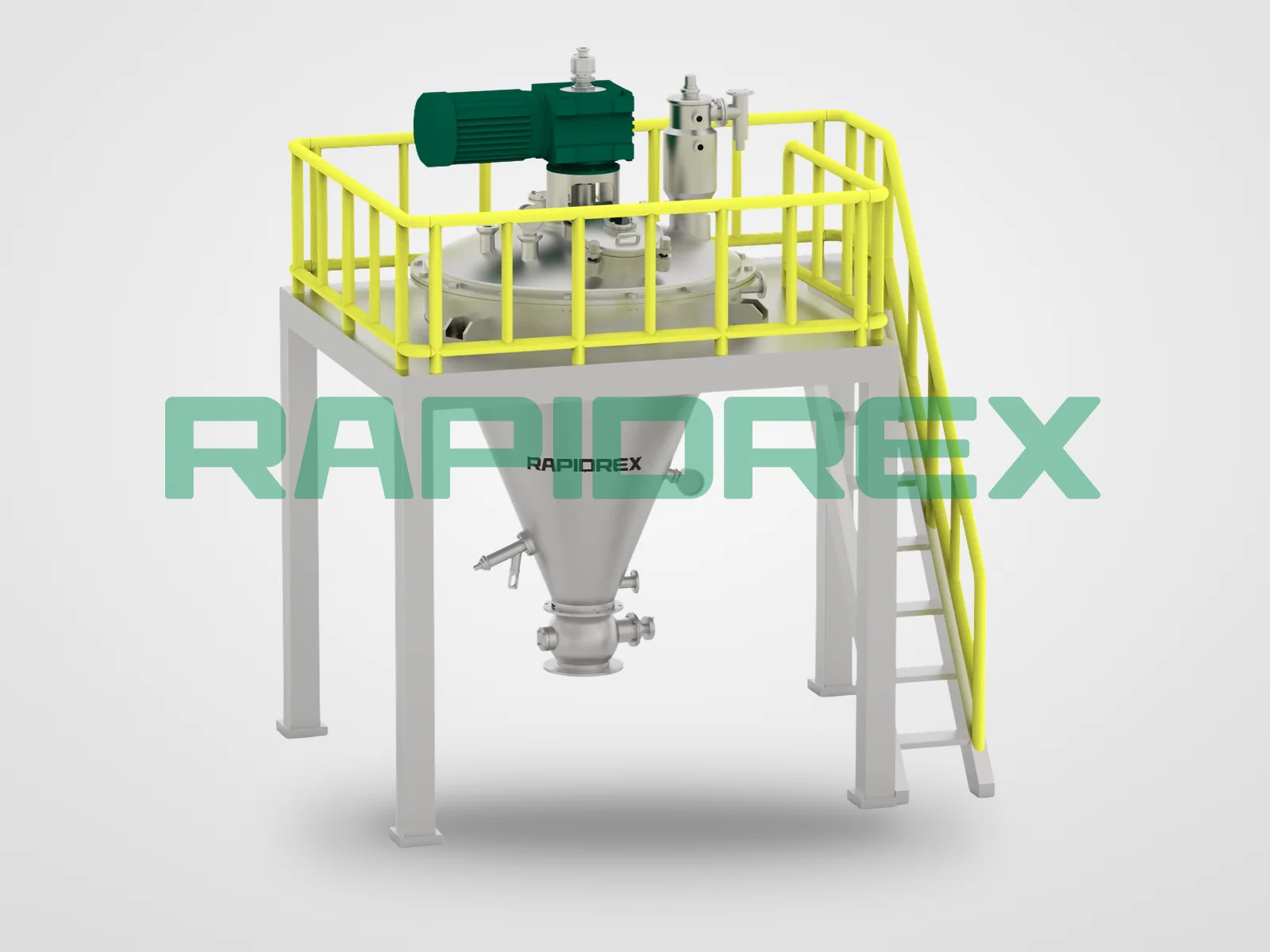
Vacuum & Conduction Drying · Pilot scale
Pilot Ribbon Conical Vacuum Dryer
A ribbon agitator in a conical vessel with vacuum and jacket heating combines mixing and drying.
Learn more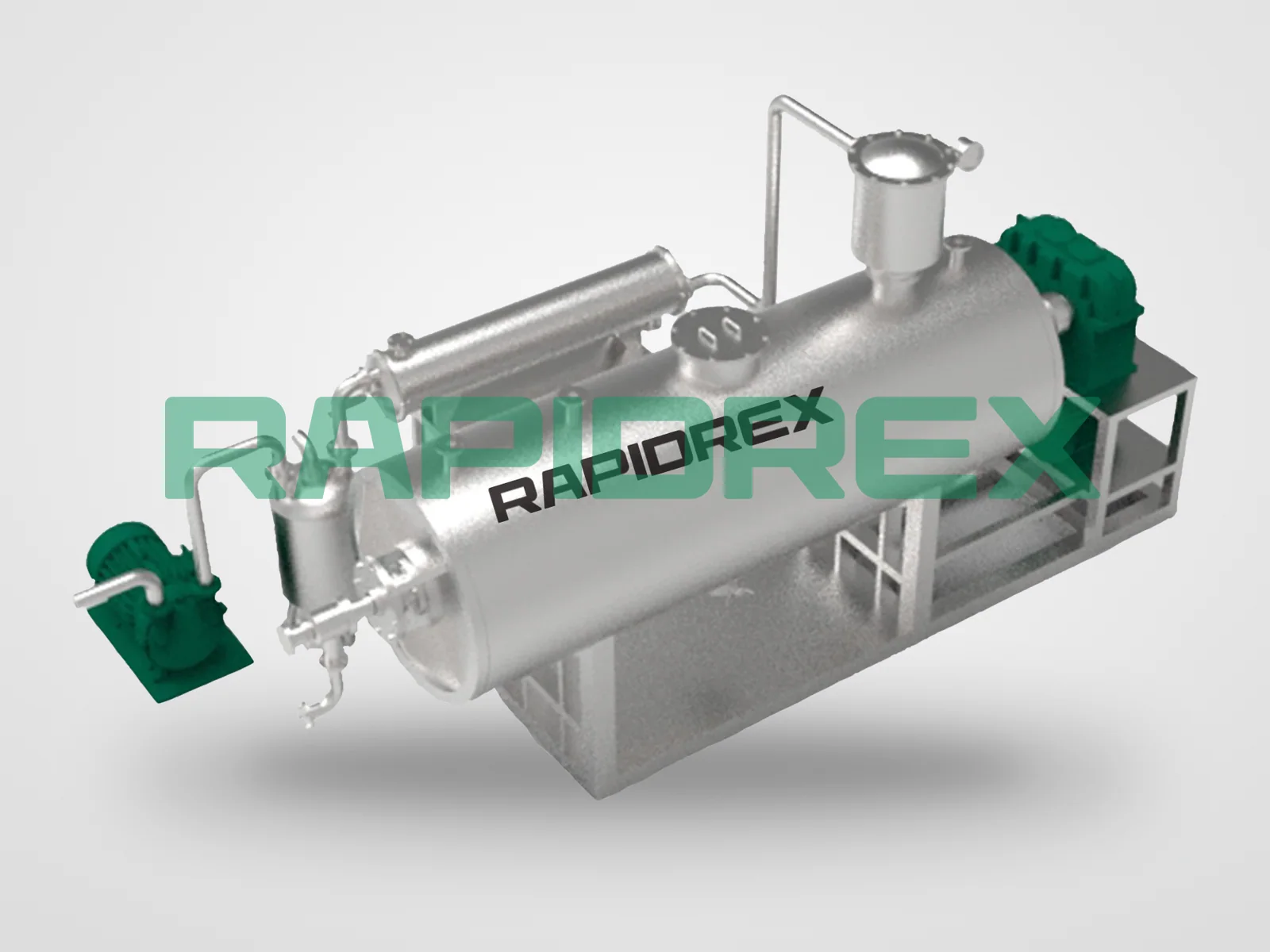
Vacuum & Conduction Drying · Pilot scale
Pilot Vacuum Rake Dryer
Rake agitation with vacuum heating, suited to filter cakes and pastes, with solvent recovery.
Learn more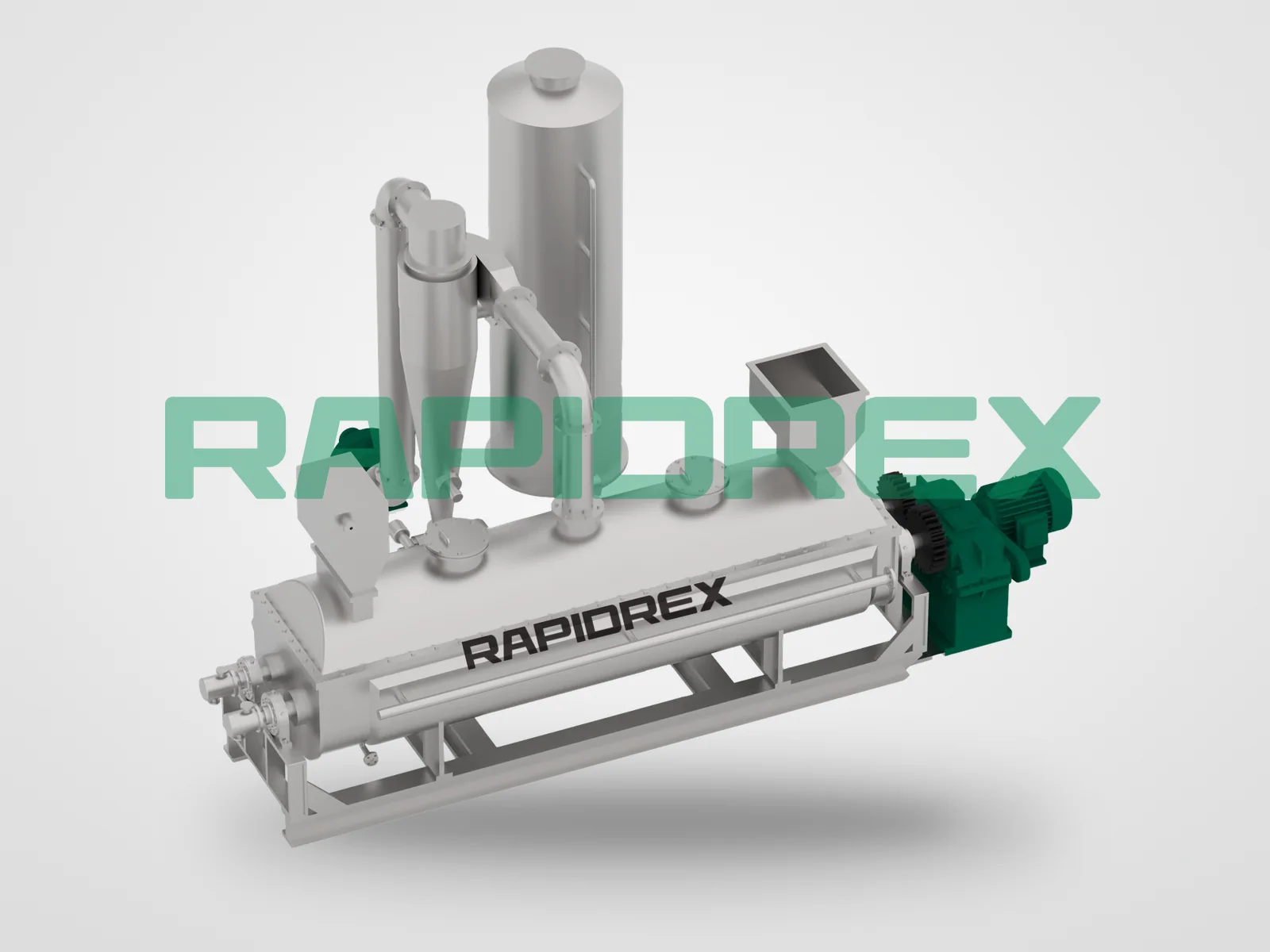
Vacuum & Conduction Drying · Pilot scale
Pilot Vacuum Paddle Dryer
Heated paddles give a large heat-transfer area for drying wet materials under vacuum.
Learn moreTypical application fields
Talk to an engineer about your material and process
Tell us about your material and goal. We help with selection and can arrange a sample trial.